A room can be filled with expensive furniture and still feel unresolved. Another can appear relatively restrained yet carry a quiet authority that is unmistakable. That distinction sits at the heart of high end interior design. It is not simply a question of budget, nor of recognisable brands, but of how space, proportion, materiality and craftsmanship are brought together with discipline.
For discerning homeowners, the real value of a luxury interior lies in how it performs over time. It should read beautifully at first glance, certainly, but it must also support the rhythms of daily life, reflect the architecture of the property and hold its integrity years after installation. The homes that achieve this are rarely accidental. They are carefully composed.
What high end interior design really means
High end interior design begins with intention. Every decision, from circulation routes to stitching detail on a banquette, should relate to a wider vision. In well-considered interiors, there is a sense that nothing has been chosen in isolation. The joinery speaks to the architecture, the lighting responds to mood as much as function, and the furnishings feel tailored to the room rather than placed within it as an afterthought.
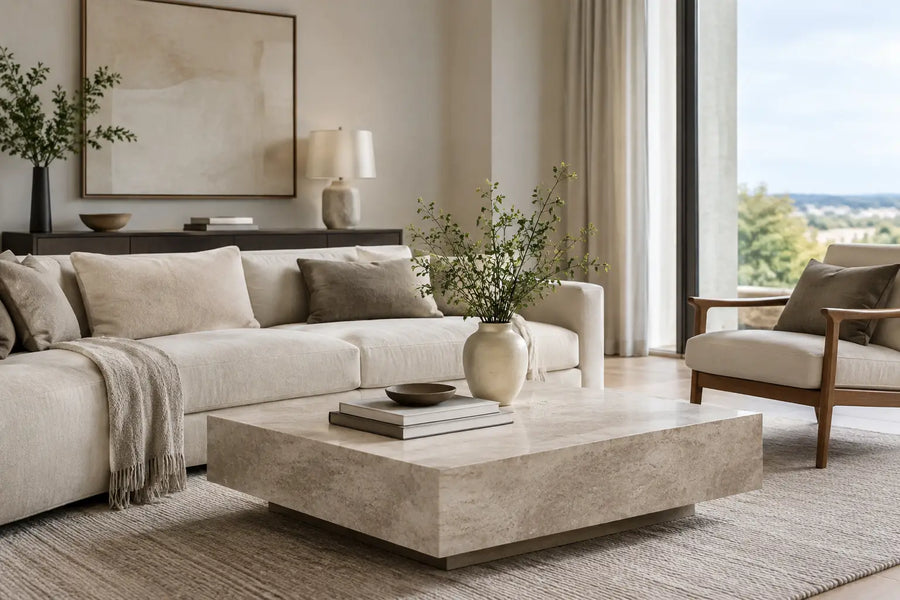
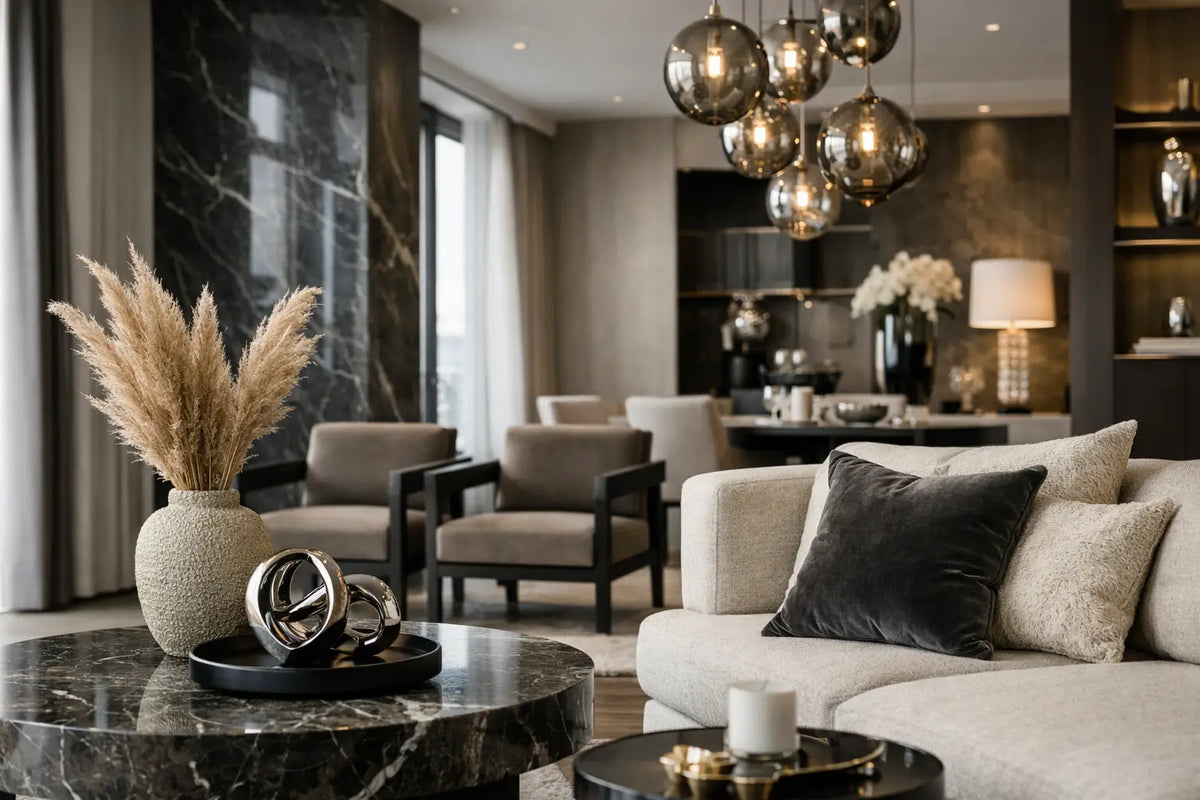
This is why luxury design is often misunderstood. Many people associate it with visual richness alone - layered textures, statement lighting, rare marble, sculptural furniture. Those elements can be part of the language, but they are not the definition. A pared-back penthouse can be just as luxurious as a richly detailed townhouse if the design has depth, precision and a clear point of view.
Quality reveals itself in the things that are not immediately obvious. Cabinetry interiors finished as carefully as visible facades. Stone slab selection considered for veining and bookmatching. Seating designed around actual human comfort rather than showroom proportions. These are the choices that create a home with substance.
The foundations of high end interior design
Space planning before decoration
The strongest interiors are usually resolved long before fabrics and finishes are discussed. Spatial planning is the framework that allows everything else to succeed. Rooms should feel balanced, circulation should be natural and furniture layouts should respond to both architecture and lifestyle.
This is particularly important in large homes, open-plan spaces and properties with complex architectural features. A generous footprint does not automatically create ease. Without careful planning, even substantial rooms can feel awkward, underused or visually fragmented. High-end design addresses how a client lives within the home - how they entertain, work, retreat and move through the day.
A formal drawing room used twice a year may matter less than a beautifully organised family kitchen with concealed storage, layered lighting and seating that invites people to remain. Luxury is often felt most strongly where function has been deeply understood.
Material quality and authenticity
Materials shape the emotional register of an interior. They affect how a room reflects light, how surfaces age and how the space is experienced at close range. In high end interior design, materials are selected not only for appearance but for integrity.
Natural stone, solid timber, hand-finished plaster, bronze, wool, linen and fine leather all have a visual depth that imitations rarely sustain. They mature differently too. A timber floor may soften and gain character. Brass may acquire a gentle patina. These changes tend to enrich the interior rather than diminish it.
That said, expensive material is not always the right material. It depends on context. A delicate silk wallcovering may be exquisite in a principal suite yet entirely impractical in a busy family corridor. A polished marble floor can read beautifully in one property and feel too formal in another. Good design lies in discernment, not excess.
Craftsmanship and bespoke detail
One of the clearest markers of a high-end interior is the level of customisation. Bespoke elements allow a scheme to respond precisely to a room's dimensions, architectural character and the client's way of living. This might involve made-to-measure upholstery, specialist joinery, tailored rugs, custom lighting or entirely original furniture pieces.
The purpose of bespoke design is not novelty. It is refinement. Off-the-shelf pieces can be excellent, but they often require compromise in scale, finish or function. A bespoke headboard can resolve ceiling height and wall width elegantly. Custom joinery can integrate media, display and storage without visual clutter. A dining table designed to exact dimensions can improve both proportion and flow.
Craftsmanship matters here because design intent is only as strong as the execution. Fine detailing, precise finishing and expert installation are what translate an idea into a convincing interior.
Why restraint matters in luxury interiors
There is a common assumption that high-end spaces should announce themselves immediately. In practice, the most accomplished interiors often exercise restraint. They know where to be quiet.
Restraint does not mean minimalism, nor does it require the absence of ornament. It means editing carefully enough that each element has room to matter. A room with exceptional architectural panelling, a sculptural chandelier and richly figured stone may need simpler upholstery and a more controlled palette. If every surface competes for attention, the effect can feel expensive yet unsophisticated.
This is one of the reasons timeless interiors tend to age better than schemes built around short-lived trends. Trend-led decisions can still have a place, particularly in accessories or secondary spaces, but the architectural language of a home should carry more permanence. Proportion, craftsmanship and material honesty are far more enduring than colours or motifs enjoying a brief cultural moment.
The role of lighting in high end interior design
Lighting is often what separates a room that looks good in photographs from one that feels exceptional to inhabit. It should be layered, architectural and responsive.
A luxury interior rarely relies on a single central fitting to do all the work. Instead, it uses ambient, task and accent lighting to shape atmosphere throughout the day. Wall lights can soften vertical planes, concealed LED detailing can add quiet depth, table lamps can create intimacy, and carefully directed accent lighting can draw attention to art, texture and craftsmanship.
The decorative statement is only one part of the story. A chandelier may provide focus over a staircase or dining table, but if the surrounding scheme lacks considered secondary lighting, the room will still feel incomplete. This is where technical planning matters as much as aesthetics.
Personalisation is what makes a house feel singular
True luxury is rarely generic. The finest interiors are grounded in the client rather than in a formula. That does not mean every room must be overtly expressive or filled with personal motifs, but it should feel specific to the people who live there.
For one client, that may mean a quietly tailored interior built around art, privacy and calm. For another, it may involve dramatic entertaining spaces, a cinematic media room and highly detailed finishes that create a stronger sense of occasion. Neither approach is inherently more luxurious. The distinction lies in how well the design reflects lifestyle, architecture and aspiration without losing coherence.
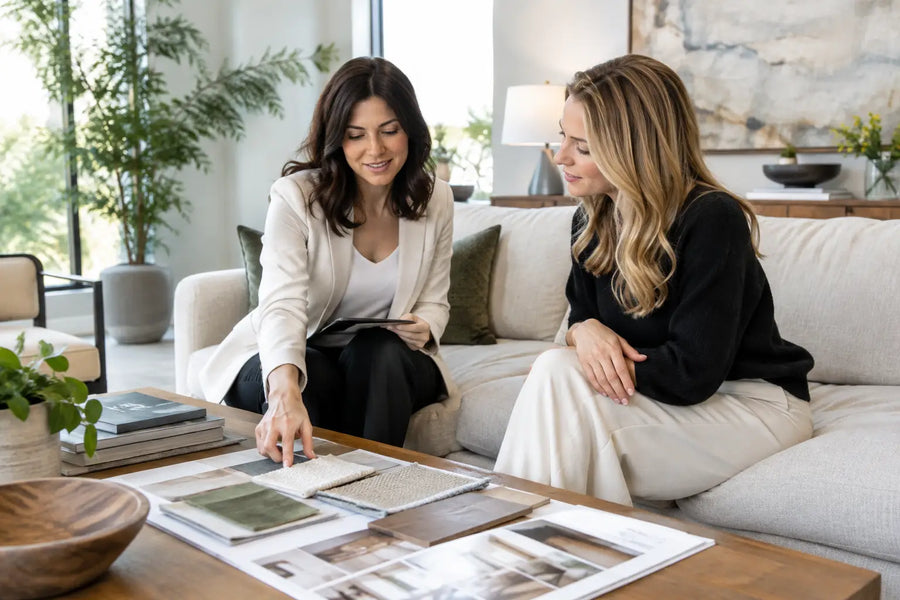
This is where a full design process becomes especially valuable. When concept development, technical detailing, procurement and final styling are all considered as part of one vision, the result tends to feel resolved rather than assembled over time.
Investment, longevity and the question of value
High-end interiors involve significant investment, but value should be judged by more than initial outlay. The more useful question is whether the design will endure - practically, aesthetically and emotionally.
Well-made upholstery that can be re-covered, solid joinery built for decades of use and classic materials with natural longevity often represent better value than cheaper alternatives that need replacing within a few years. The same applies to planning decisions. Correcting poor layouts, inadequate lighting or badly considered storage after completion is invariably more disruptive and more costly.
There are, of course, different ways to approach investment. Some clients prioritise architectural intervention and bespoke fixed elements first, then layer furniture in stages. Others prefer a complete turnkey scheme where every detail is addressed at once. It depends on the property, the timeline and the level of finish required. What matters is that the priorities are intelligently set.
For clients seeking a home with depth, precision and individuality, the strongest results come from seeing design as a long-term discipline rather than a decorative exercise. That is where studios such as Touched Interiors bring particular value - not through volume of selection alone, but through the ability to shape a complete, coherent vision.
High end interior design is, at its best, a form of quiet authorship. It creates homes that feel composed rather than crowded, personal rather than performative, and lasting rather than momentary. The real luxury is not simply what is seen on arrival, but what continues to feel right long after the room has become part of everyday life.
Touched Interiors
The Insider is written by the Touched Interiors design studio in Manchester, founded by Kunal Trehan in 2009 and named Interior Design Studio of the Year in 2024 and 2025. About the studio.