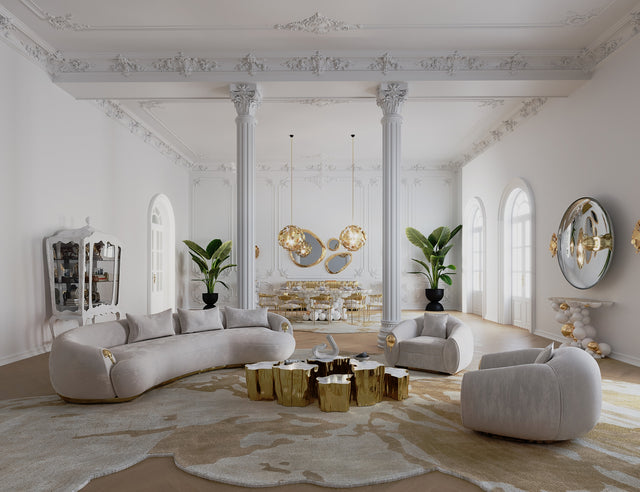
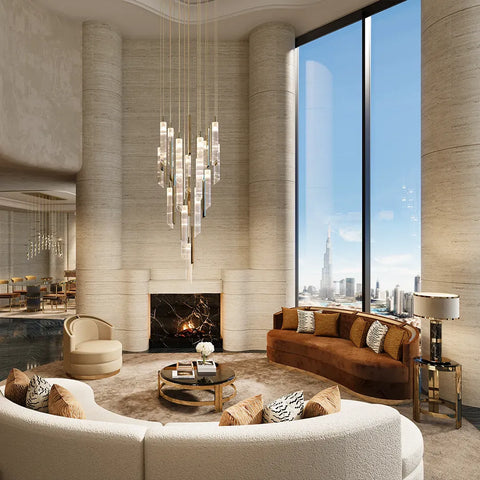
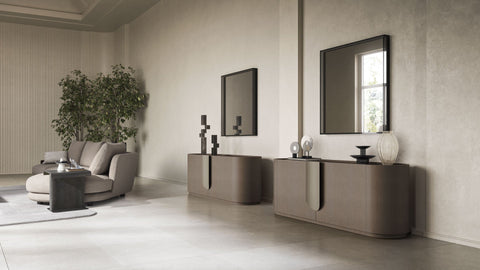
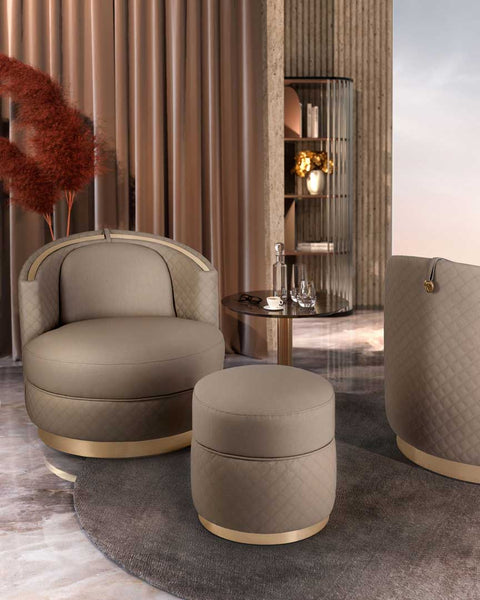






A window is rarely a blank opening. It frames a view, introduces changing daylight and, after dark, becomes part of a room’s sense of privacy and enclosure. Luxury window treatments bring these practical demands into balance with the architecture, furnishings and atmosphere of a home. When considered from the outset of a project, they lend a finished, composed quality that is difficult to achieve with an afterthought.
For private residences, the question is not simply whether to choose curtains, blinds or shutters. It is how each element will behave throughout the day, sit within the proportions of the room and support the way it is used. A drawing room facing a garden has different requirements from a principal bedroom overlooking the city, just as a double-height hall requires a different response from a low-ceilinged study.
What Defines Luxury Window Treatments?
The distinction begins with design intent. Fine window treatments are developed in relation to the room rather than selected in isolation. Their scale, fullness, lining, hardware and method of operation are specified with the same care given to upholstery or decorative lighting.
Material quality is equally decisive. A finely woven linen may offer relaxed texture and a soft diffusion of daylight, while wool, silk or a silk-linen blend introduces depth and formality. Each has a different drape, response to sunlight and long-term character. The right choice depends on exposure, room use and the desired level of formality, not simply appearance in a sample book.
Craftsmanship is often most apparent in details that are not immediately conspicuous: pattern matching across widths, carefully weighted hems, hand-finished leading edges and headings that maintain their shape after years of use. Good making also accounts for the practical realities of a room. Curtains that pool generously can look beautiful in a formal setting, but may be unsuitable near frequently used doors or beneath a radiator. Precision is what allows visual softness to coexist with reliable function.
Begin With Light, Privacy and Architecture
A useful starting point is to observe the room at different times. Morning sun, western glare, nearby properties and the view after dusk all affect the specification. In many schemes, one treatment cannot comfortably answer every requirement, which is why layering is such an enduring approach.
Sheers Create Daytime Ease
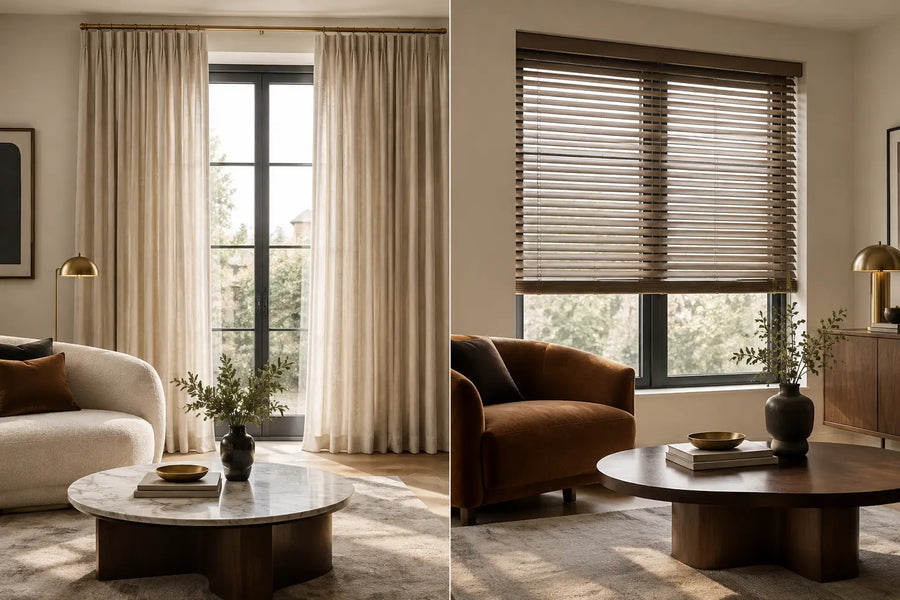
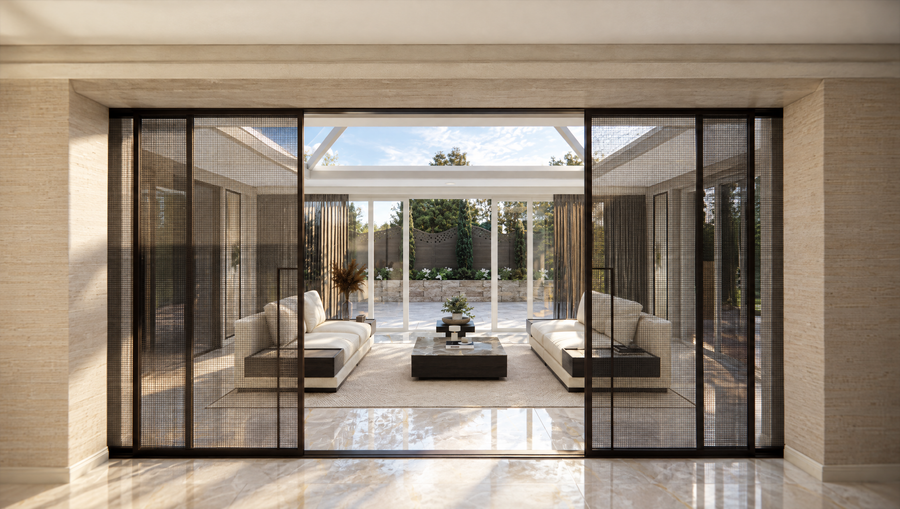
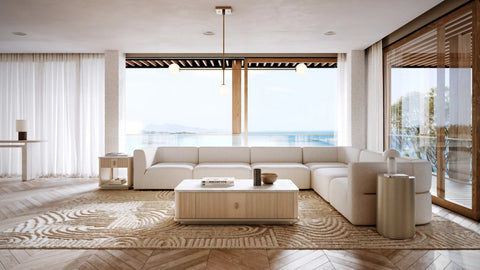
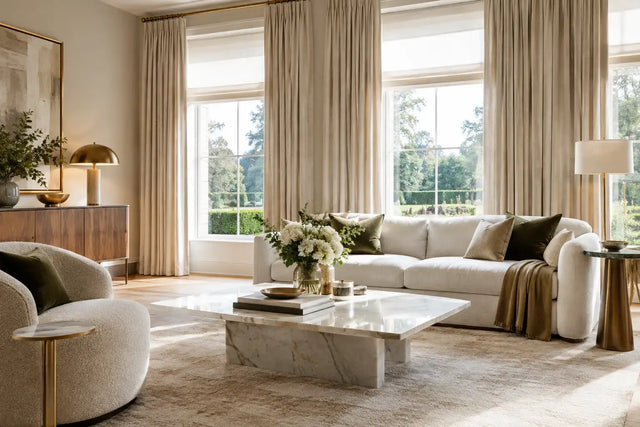
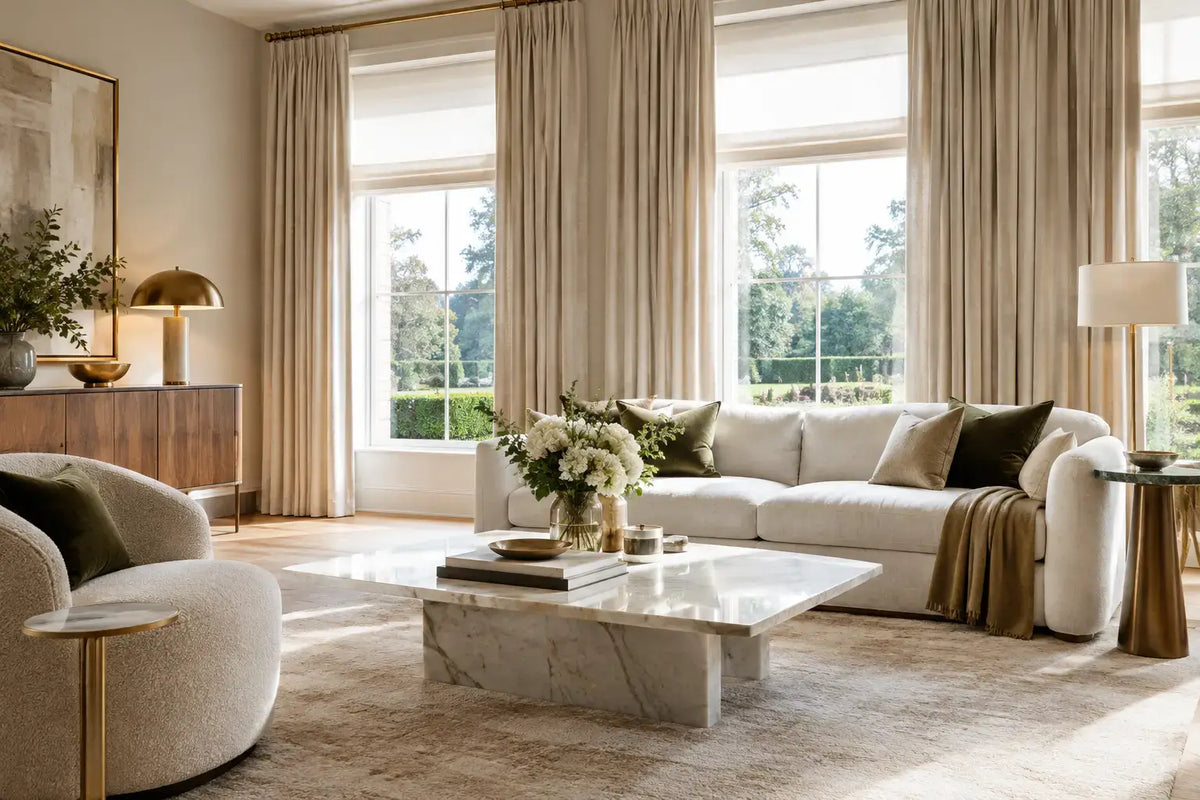
Sheer curtains or finely woven translucent blinds temper direct daylight without closing a room off from its surroundings. They are particularly effective in reception rooms, glazed extensions and bedrooms where privacy is needed during the day but a heavy visual boundary would feel oppressive.
The quality of the fabric matters greatly here. A sheer should diffuse light with a gentle, even character rather than look flimsy or overly reflective. Its colour should also be judged against the wall finish and daylight, not only under showroom lighting. Warm whites can calm cool northern light, while neutral stone and soft grey tones often sit quietly against contemporary architectural finishes.
Blackout Is a Performance Specification
Bedrooms, cinema rooms and certain guest suites require far greater light control. A blackout lining or interlining can substantially improve darkness, thermal comfort and the drape of the finished curtain. However, true blackout performance depends on the whole installation. Light will still enter around the top, sides and return of a curtain if these areas have not been carefully detailed.
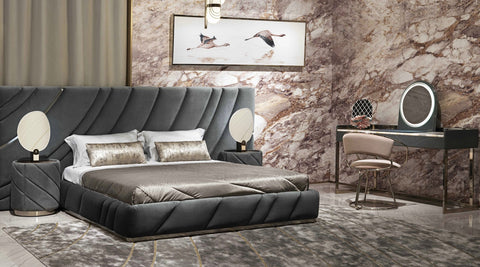
For this reason, a recess blind combined with full-height curtains is frequently preferable in principal bedrooms. The blind manages close-fitting light control, while curtains provide softness, acoustic benefit and visual presence. This is also a thoughtful solution where a bedroom faces a brightly lit street or neighbouring building.
Respect the Window’s Proportions
Window treatments should clarify the architecture, not accidentally diminish it. Mounting a track close to the ceiling, or within a discreet recessed pelmet, can make a room feel taller and give curtains a deliberate vertical line. Extending a track beyond the window allows the fabric to stack away from the glass, preserving more of the view and admitting additional daylight.
Conversely, not every window benefits from full-length curtains. A beautifully detailed timber casement, a deep stone reveal or a window seat may call for a Roman blind that sits neatly inside the opening. The key is to choose a treatment that acknowledges the architectural feature rather than conceals it by habit.
Curtains, Blinds and Shutters Each Have a Place
Curtains remain the most versatile choice for rooms where warmth, acoustic softness and a sense of occasion are desired. Their character can range from tailored ripple-fold linen to traditionally hand-pleated velvet. Fullness should be proportionate to the fabric and heading: too little makes the treatment look mean; too much can feel cumbersome, particularly in a contemporary interior.
Roman blinds offer a tailored alternative, working well in kitchens, studies, dressing rooms and smaller bedrooms. They allow pattern and texture to be introduced without the volume of drapery. Their construction needs particular attention when a patterned fabric is selected, as the design should fall in the right position when the blind is both raised and lowered.
Roller blinds are often chosen for their discretion and technical performance. In high-specification schemes, they are frequently concealed within ceiling pockets or recesses and paired with decorative curtains. Solar-control fabrics are especially valuable on large south-facing glazing, where they reduce glare and heat gain while maintaining a degree of outward visibility.
Shutters bring a more architectural result and can be appropriate in period properties, coastal homes and spaces with strong existing joinery. Their fixed visual presence means their proportions, louvre size and paint finish must relate closely to the room. They are not always the right answer for every period window, particularly where ornate reveals or delicate original details deserve to remain visible.
The Value of Layering
Layered treatments are not merely decorative. They allow a room to change character with the light and with the needs of its occupants. A translucent blind can filter midday sun; lined curtains can provide privacy in the evening; a blackout blind can create restfulness at night. This flexibility is particularly valuable in homes used for both everyday family life and entertaining.
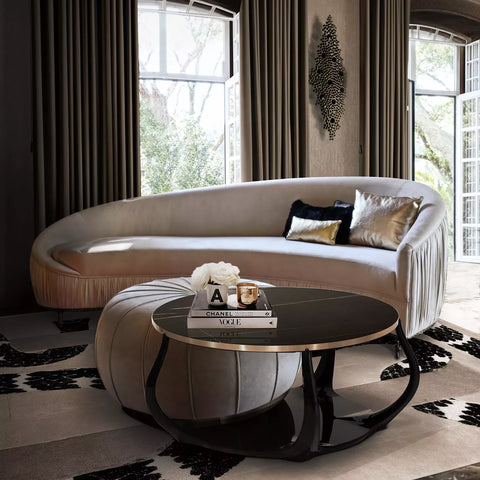
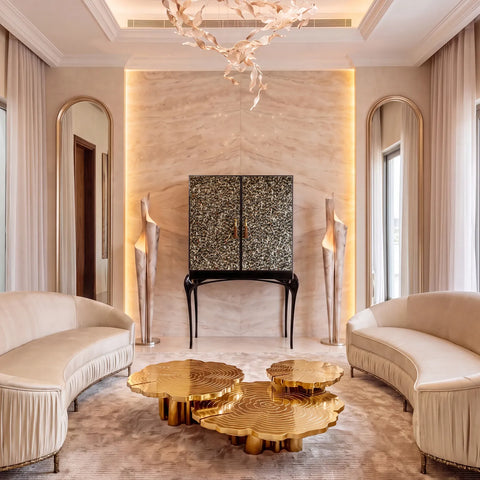
Layering also creates visual depth. A sheer placed close to the glazing, framed by more substantial outer curtains, gives the window a composed finish even when the curtains are open. In a restrained palette, the distinction may come from texture rather than contrast: dry linen against brushed wool, or a finely textured blind beneath a softly lustrous drapery fabric.
There is, however, a point at which layering becomes excessive. In a compact room, too many treatments can crowd the reveal and interrupt daylight. The design should earn every layer through a clear functional or aesthetic purpose.
Hardware and Automation Need Equal Attention
The most beautiful fabric can be undermined by unsuitable hardware. Tracks and poles should be selected early, particularly where they need to be recessed, curved around bays or integrated into joinery. Their finish may be intentionally discreet, or it may form part of the decorative scheme in bronze, antiqued brass or a carefully matched painted finish.
Motorisation is often worthwhile for tall glazing, difficult-to-reach windows and rooms with multiple treatments. It also brings a quieter kind of convenience to bedrooms and living areas, allowing light and privacy to be adjusted at set times or from a wall control. The best systems feel intuitive rather than conspicuous.
Planning is essential. Power locations, track positions, access for maintenance and coordination with lighting controls should be resolved before ceilings are closed. Retrofitting is possible, but it rarely offers the same visual clarity as an installation considered alongside the interior architecture.
Specify for Longevity, Not Just the First Impression
A fabric that appears exquisite in a small cutting may not suit a sun-filled room. Silk can be beautiful, but it requires appropriate lining and protection from prolonged exposure. Linen has a relaxed honesty and wears gracefully, although its natural movement should be embraced rather than treated as a flaw. Wool offers excellent body and acoustic qualities, while performance fabrics can be a sensible choice in family rooms or areas exposed to regular use.
Care should inform the decision too. Ask how treatments will be cleaned, whether the fabric can be removed, and how the mechanism will be serviced. For a large home, consistency across rooms matters, but repetition does not. A shared palette of metal finishes, linings or neutral sheers can create continuity while allowing each room its own character.
At Touched Interiors, window treatments are considered as part of the wider composition: their relationship to furniture placement, lighting, joinery and the experience of moving through a home. That level of coordination is where a practical necessity becomes a quietly defining element of the interior.
The most successful choice is usually the one that feels inevitable once installed: light softened, privacy assured and the architecture allowed to speak with greater confidence.
Touched Interiors
The Insider is written by the Touched Interiors design studio in Manchester, founded by Kunal Trehan in 2009 and named Interior Design Studio of the Year in 2024 and 2025. About the studio.