A well-furnished library does not begin with shelves. It begins with the quiet question of how the room will be used when the doors are closed: for unhurried reading, serious study, private calls, family conversation, or a little of each. Understanding how to furnish a library means giving equal weight to its atmosphere, circulation, storage, lighting and comfort. Books may be its visual signature, but the room succeeds because it supports the rituals around them.
A formal library with rare editions requires a different approach from a contemporary reading room that also serves as a home office. The best schemes acknowledge this from the outset, creating an interior with enough order to feel composed and enough ease to encourage lingering.
Begin with the room's role and architecture
Before selecting furniture, examine the proportions, natural light, ceiling height and architectural character of the room. A library should feel settled within the house rather than applied as a decorative theme. In a period property, existing panelling, cornicing and fireplaces may inform the rhythm and scale of joinery. In a newer residence, the room may call for cleaner-lined shelving, finely detailed timber and more sculptural furnishings.
Define the primary purpose honestly. A library designed for a serious collector needs generous, accessible book storage and a methodical catalogue. A room used for reading and entertaining needs a more conversational furniture plan. If work will take place here, a proper desk and discreet technology provision are essential. Trying to make one small room perform all these roles can lead to overcrowding, so priorities should be established before the layout is fixed.
Think, too, about arrival and movement. There should be a clear route into the room and around the principal furniture, without squeezing past a desk or catching an armchair on shelving. In larger homes, a library can work beautifully as a transitional room between more public spaces and private quarters. In more compact settings, it benefits from a distinct threshold - perhaps through a change in wall finish, a pair of pocket doors or a considered lighting scene.
Plan shelving as furniture, not background
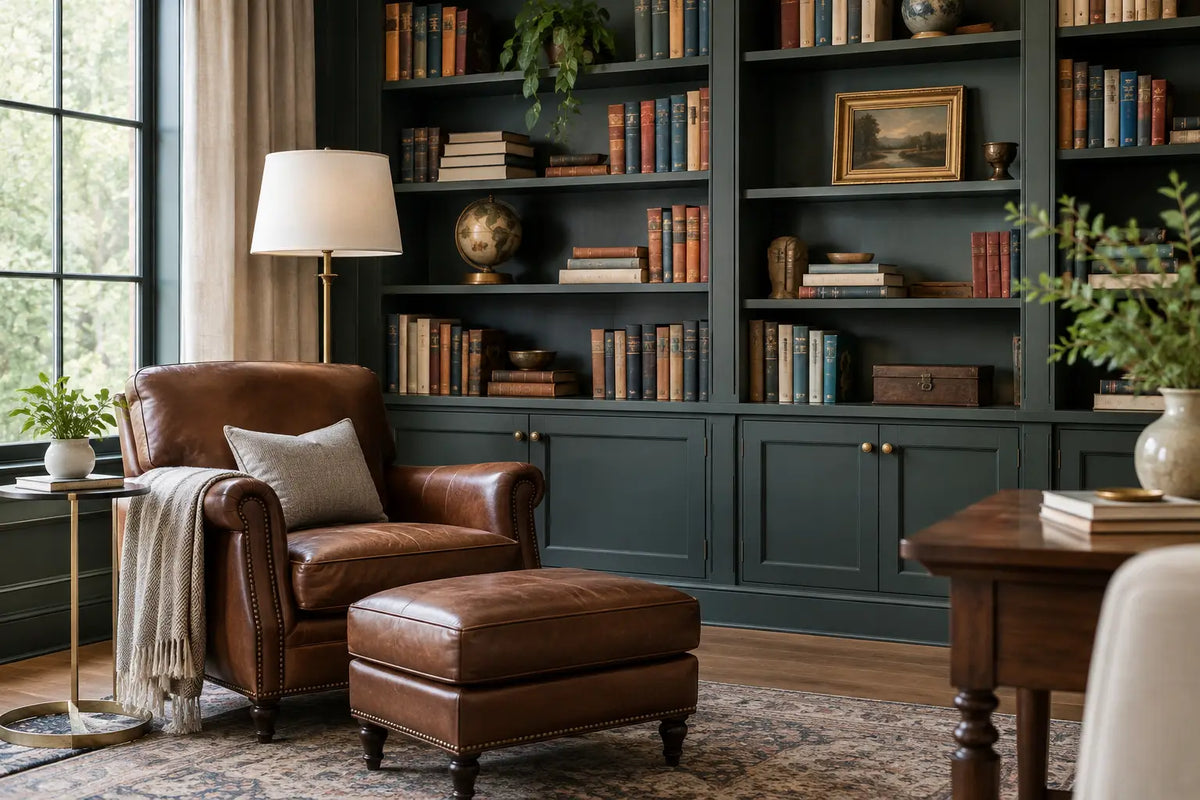
Library joinery is often the largest visual element in the room, and it deserves the same attention as a commissioned cabinet or table. Fully fitted shelving gives a library its permanence, particularly where it follows the wall geometry precisely and accommodates architectural interruptions with grace. Freestanding bookcases can be equally effective where flexibility is valuable, or where an antique or contemporary statement piece brings character that built-in joinery cannot.
The depth of shelves matters. Most books sit comfortably on shelves around 250 to 300mm deep, but art monographs and large-format volumes need more allowance. A mix of shelf heights avoids an overly uniform effect and accommodates a changing collection. Adjustable shelving has practical merits, although fixed sections may look more refined where the collection and display objects have been carefully planned.
Closed storage should be incorporated at low level, particularly in a working library. It provides a place for stationery, cables, printers and less attractive reference material, leaving open shelves reserved for books and objects of genuine interest. Consider the composition of the full wall: long, uninterrupted rows of books can be impressive, yet occasional cabinets, a fireplace surround, a framed artwork or a recessed desk introduce useful rhythm.
Material selection shapes the room's mood. Quarter-sawn oak offers restraint and durability, walnut brings depth and formality, while lacquered joinery can lend a sharper, more contemporary expression. The finish should withstand regular handling and sit comfortably alongside the building's existing timberwork. In a dark library, a matt or low-sheen finish is usually more convincing than a highly reflective surface, which can make the room feel overly theatrical.
Give books room to breathe
A library need not be filled to capacity on day one. Leaving measured intervals between groups of books allows the eye to rest and gives special volumes appropriate prominence. A small number of objects - a patinated bronze, ceramic vessel, framed photograph or mineral specimen - can add personal texture, but shelves should not become a display cabinet for unrelated accessories.
Organising by subject, author or language often creates a calmer result than arranging exclusively by colour. Colour can be useful as a secondary layer, particularly in a casual reading room, but an overly choreographed rainbow can feel detached from the way books are actually used. The most convincing libraries reveal their owners' interests.
Choose seating for long, unhurried use
The central question for seating is not how it photographs, but how it feels after an hour with a book. A deep club chair, a tailored wingback or a generously proportioned occasional chair can all work, provided the seat height, back support and arm position suit reading. The chair should allow a relaxed posture without placing the reader so low that standing becomes awkward.
One exceptional reading chair beside a window may be enough for a small room. For a larger library, create distinct zones: two chairs facing one another for conversation, a sofa positioned near the fire or focal wall, and perhaps a quieter chair in a more sheltered corner. This approach prevents a broad room from feeling like a showroom arrangement.
Upholstery benefits from considered practicality. Wool, mohair and high-quality velvet bring warmth and depth, while leather acquires a pleasing patina in a room used daily. Pale linen can be beautiful but may be less forgiving near fires, pets or frequent use. A tailored loose cover offers a degree of flexibility, although it is not always right for a more formal interior.
Every seat needs a nearby landing place for a book, drink or reading glasses. Small side tables should be stable, correctly proportioned and positioned without blocking access to the chair. A central table, ottoman or low cocktail table can anchor a conversational arrangement, but keep its scale modest enough to preserve clear movement.
Light the pages, shelves and room
Lighting is where many libraries fall short. Decorative wall lights alone create ambience, but they rarely provide the focused illumination needed for reading. A successful scheme layers general light, task lighting and joinery lighting, with each source controlled separately.
A floor lamp with an adjustable arm beside an armchair is often the most comfortable reading solution. A desk requires a dedicated task light that limits glare on screens and paper. Picture lights or discreet shelf illumination can bring depth to bookcases, particularly in the evening, but fittings should be carefully recessed or shielded so that the light source itself does not distract.
Avoid relying on a central pendant as the sole source of light. It may provide a handsome focal point, yet it tends to leave corners in shadow and create an overly flat effect on shelving. Dimming is particularly valuable in a library, allowing the room to move from daylight study to a softer evening setting without compromise.
Daylight requires equal thought. Direct sun can fade book spines, textiles and artworks over time. Interlined curtains, solar-control blinds or carefully selected sheers can soften glare while retaining the pleasure of natural light. The right treatment depends on orientation, privacy and the value of the collection.
Ground the room with materials that improve acoustics
Books naturally absorb some sound, which is one reason a full library feels so composed. However, timber floors, glazed doors and hard joinery can still create unwelcome reverberation. A substantial hand-knotted rug beneath the main seating group will soften acoustics and define the furniture arrangement. Curtains, upholstered seating and fabric-lined panels can add further quietness without making the room feel muffled.
Wall finishes deserve more thought than a standard painted backdrop. Deep mineral paint, grasscloth, timber panelling or a finely woven textile wallcovering can give the space depth under low evening light. Rich colour is often well suited to a library, but darkness alone does not create intimacy. The balance of texture, lighting and contrast is what makes a room feel enveloping rather than simply dim.
Integrate work and technology with restraint
A library can accommodate contemporary life without advertising it. If the room includes a desk, allow enough space for proper task chairs, files and screen use rather than treating work as an afterthought. Bespoke joinery can conceal printers, charging points and office equipment behind ventilated doors, while cable routes should be resolved before installation.
For clients who use the library for private meetings or calls, acoustic performance and screen placement deserve early planning. A television is rarely the natural focal point in this setting, though it can be concealed within joinery where the brief demands it. The aim is not to deny technology, but to make it visually recessive.
Finish with evidence of a life well lived
The final layer should feel collected, not staged. A library gains authority from books that have been read, inherited or sought out, alongside objects with a genuine connection to the household. An antique writing box, a travel photograph, a favourite edition left open on a stand or a carefully chosen artwork can say far more than decorative excess.
At Touched Interiors, library schemes are approached as deeply personal rooms, with architecture, furniture and joinery considered together rather than selected in isolation. That discipline matters because a library is usually experienced slowly. Give it comfortable places to sit, light that respects both page and atmosphere, and materials that become richer through use; the room will reward its occupants for decades.
Touched Interiors
The Insider is written by the Touched Interiors design studio in Manchester, founded by Kunal Trehan in 2009 and named Interior Design Studio of the Year in 2024 and 2025. About the studio.