
A kitchen worktop is where the visual language of a kitchen meets its daily demands. It frames the cabinetry, catches the changing light, and has to withstand preparation, heat, water and regular use without losing its composure. The most appropriate kitchen worktop material options are therefore not chosen by appearance alone. They are selected for the way the household cooks, entertains and lives, as well as the architectural character of the room.
For a considered residential project, the worktop should be specified alongside cabinetry finishes, splashbacks, lighting and appliance positions. A material that appears exquisite as a small sample can behave very differently across a long island, around an undermounted sink or in a richly sunlit room.
Kitchen Worktop Material Options at a Glance
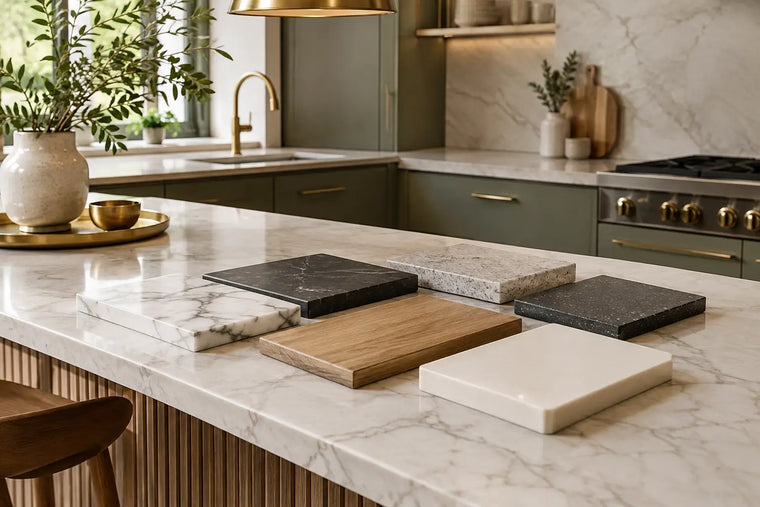
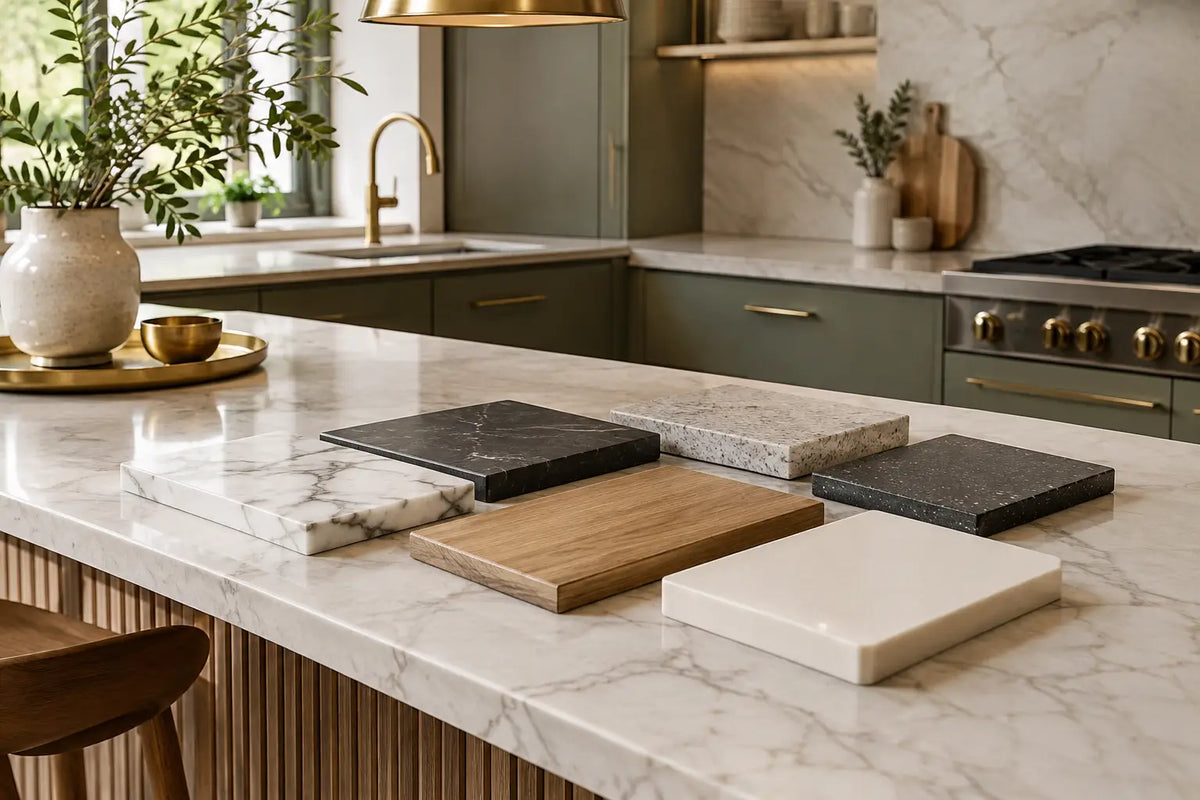
Natural stone, engineered stone, sintered stone, porcelain, solid surface, timber, stainless steel and specialist finishes each bring a distinct balance of character and performance. There is no universally superior choice. A family kitchen with daily cooking requires a different brief from a refined pied-à-terre designed principally for entertaining.
The best schemes often use more than one material. A honed stone island can provide presence and durability, while timber introduces warmth to a breakfast area. This approach also allows the material to respond intelligently to each zone rather than forcing one surface to do every job.
Natural stone: marble, quartzite and granite
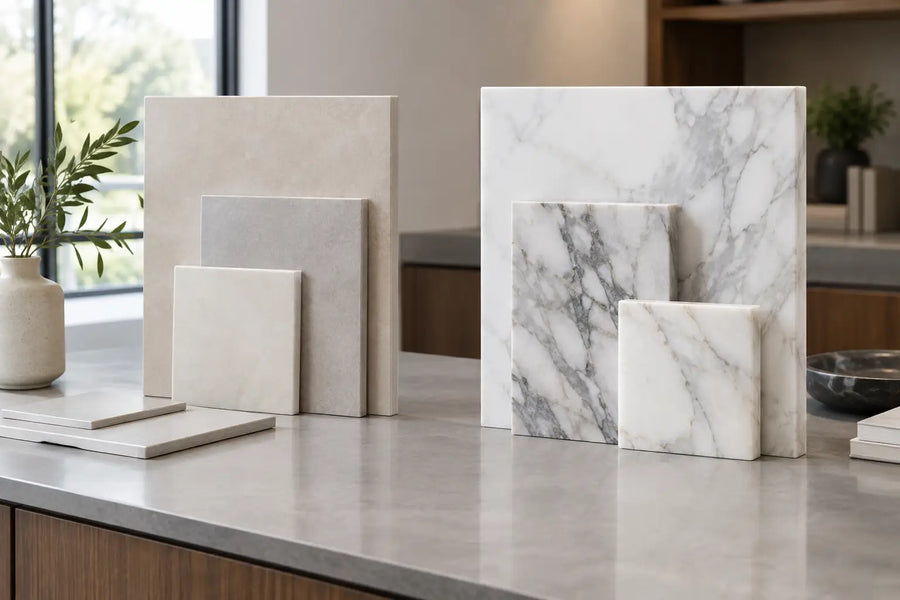
Natural stone has an authority that manufactured materials can imitate but not entirely replicate. Every slab carries its own veining, mineral movement and variation in tone. On a generous island, that individuality becomes part of the architecture of the room.
Marble remains prized for its depth and soft luminosity. Calacatta, Arabescato and Breccia varieties can be restrained or dramatically expressive, depending on the slab selection. Yet marble is relatively porous and reacts to acidic ingredients such as lemon, wine and vinegar. Honed finishes can make etching less visually conspicuous than polished surfaces, but they do not prevent it. For clients who appreciate patina, this is part of marble's charm. For those expecting an immaculate surface after intensive family use, it may be a source of frustration.
Quartzite is frequently specified where a similar sense of natural movement is desired with stronger resistance to scratching and etching. Its naming can be confusing, as some stones sold under the term quartzite are softer materials. The exact slab should always be assessed, rather than relying on a trade description alone. Granite offers excellent durability and has moved well beyond the highly polished, heavily speckled look associated with earlier kitchen schemes. Honed, leathered or brushed finishes in quieter varieties can feel exceptionally contemporary.
With all natural stone, slab selection matters. Veins, fissures, colour variation and filled areas are not necessarily flaws; they are inherent qualities that should be reviewed in person and carefully mapped before fabrication. Bookmatching, vein direction and the position of joins deserve proper attention.
Engineered stone and quartz composite
Engineered quartz surfaces combine crushed mineral with resin binders to create a consistent, low-porosity worktop. They are highly practical for kitchens that see constant use, resisting common household stains and requiring no routine sealing. Their controlled appearance is also useful where a precise, uninterrupted colour is needed across large runs of cabinetry.
The trade-off is that composite surfaces can lack the visual depth and unexpected detail of a natural slab. The most successful choices tend to have a quiet, convincing ground rather than exaggerated veining. They should also be protected from direct heat: placing hot pans directly on the surface is unwise, particularly near an induction hob where visual simplicity can disguise the need for practical care.
Engineered stone is a sensible option for clients who prioritise consistency and ease of maintenance, particularly in a busy main residence. It is less persuasive where the kitchen is intended to feel materially expressive and closely connected to natural architectural finishes.
Sintered stone and porcelain
Sintered stone and large-format porcelain have become increasingly valuable within contemporary kitchen design. Produced using mineral materials subjected to intense heat and pressure, they are typically highly resistant to heat, ultraviolet light, staining and scratching. This makes them particularly suited to kitchens opening onto terraces, or rooms that receive strong daylight throughout the year.
These materials can be manufactured in fine thicknesses and used continuously across worktops, splashbacks and, in some cases, cabinet fronts. The result can be exceptionally clean, especially when mitred edges are carefully made to create the impression of a deeper solid block.
Their technical strength does not remove the need for skilled fabrication. The material can chip at vulnerable edges if poorly handled, and cut-outs around sinks, taps and hobs require exacting workmanship. A simple eased edge is often the most resilient and elegant choice. Highly elaborate profiles can work against the crisp nature of the material.
Choosing a Worktop by Use, Not Just Appearance
A kitchen used for serious cooking needs to be considered as a working environment. Heat zones, prep zones and wet areas should inform the specification from the outset. A beautiful but delicate marble may be entirely appropriate for a drinks cabinet or pastry counter, while a sintered surface is better placed beside the hob and sink.
Sink choice is equally influential. An undermounted sink gives a refined, uninterrupted plane and makes cleaning easy, but it exposes the worktop edge to regular water contact. This is usually manageable with properly sealed stone and high-quality fabrication. A Belfast or apron-front sink shifts the detailing again, creating a more traditional visual rhythm and requiring its own carefully considered support structure.
Thickness changes perception. A slim 12mm porcelain worktop can feel precise and architectural, while a 30mm or 40mm stone edge brings weight and permanence. On a large island, a mitred stone apron can create an impressive monolithic effect, but it should be supported correctly and aligned with the cabinet construction beneath. Good detailing is rarely conspicuous. It is felt in the clean line of a joint, the placement of a vein and the way the material meets the wall.
Timber and wood veneers
Timber introduces an ease that mineral surfaces cannot provide. Oak, walnut and smoked finishes lend warmth to kitchens with lacquered cabinetry, metal detailing or a substantial amount of stone. Solid timber is forgiving under glassware and pleasant to touch, making it especially attractive for dining-led islands and breakfast bars.
It does, however, ask for care. Water should not be left standing, hot pans need protection, and the surface will require periodic oiling or refinishing depending on the finish. Timber also moves naturally with changes in humidity, so installation details must accommodate expansion. Used selectively, it ages beautifully. Used around a heavily utilised sink without realistic expectations, it can become high maintenance.
For a more controlled alternative, specialist timber veneers or engineered wood surfaces can provide the desired visual warmth with greater dimensional stability. Their suitability depends on the quality of the substrate, edge treatment and the proposed use of the area.
Stainless steel, solid surface and expressive finishes
Stainless steel is often overlooked in private residences, yet it has a quiet sophistication in kitchens designed around serious culinary use. It is hygienic, heat-resistant and develops a soft record of use over time. A brushed finish, neatly folded edges and integrated splashbacks can feel tailored rather than overtly commercial. Fingerprints and fine marks are inevitable, which should be understood as part of its character.
Solid surfaces offer another route to visual continuity. Their joints can be inconspicuous, and moulded sinks or curved details are possible. They suit streamlined, contemporary compositions and can often be repaired if scratched. They are less heat-resistant than stone or sintered materials, so their placement should reflect this limitation.
There are also highly decorative options, from back-painted glass to hand-finished metal and specialist ceramic worktops. These are usually best treated as focal materials rather than default choices. In a kitchen with strong architectural intent, an unusual surface should support the wider palette rather than compete with it.
The Details That Protect a Long-Term Investment
A worktop specification is incomplete without an honest discussion about maintenance. Sealants improve the stain resistance of natural stone but do not make it invulnerable. Acidic spills should be wiped promptly, abrasive products avoided, and chopping boards used as a matter of course. Similarly, the impressive heat resistance of porcelain does not make it immune to impact from a heavy pan on an exposed corner.
Request large samples where possible, then view them beside cabinet finishes in the actual light of the room. Daylight can reveal undertones that a showroom conceals, particularly in pale quartzites, warm white porcelains and grey composite surfaces. Consider the finish underhand as well as from a distance. A highly polished stone may reflect pendant lights beautifully, while a honed surface can make a kitchen feel calmer and more tactile.
At Touched Interiors, material selection is approached as part of the whole interior composition: not as a final decorative decision, but as an early architectural one. The right surface makes daily rituals feel considered, and gains character without compromising the way the kitchen needs to work for years ahead.
Touched Interiors
The Insider is written by the Touched Interiors design studio in Manchester, founded by Kunal Trehan in 2009 and named Interior Design Studio of the Year in 2024 and 2025. About the studio.