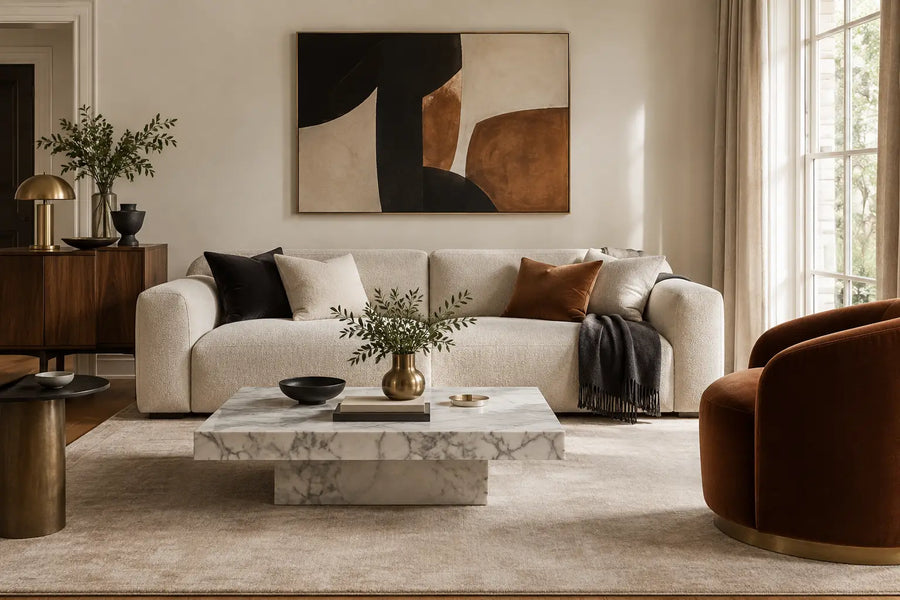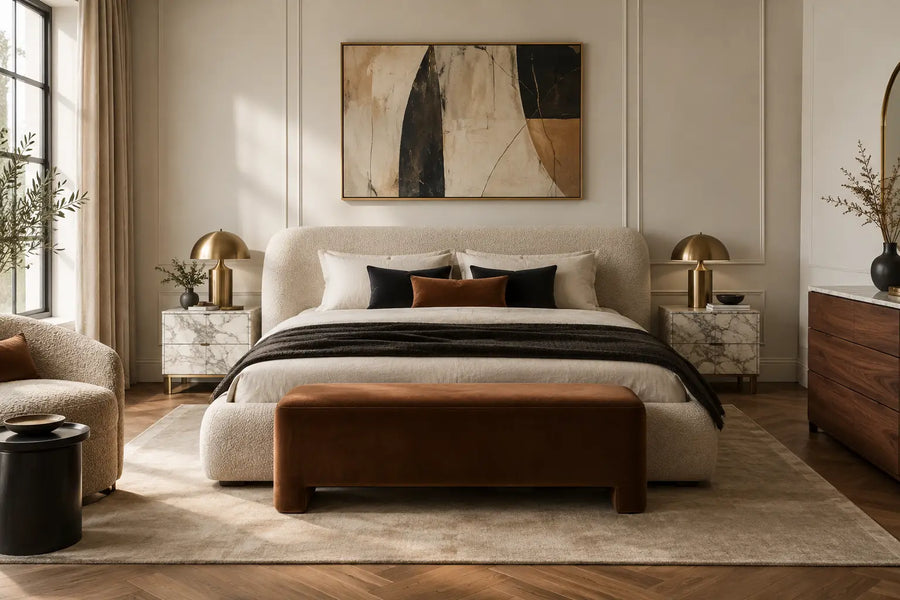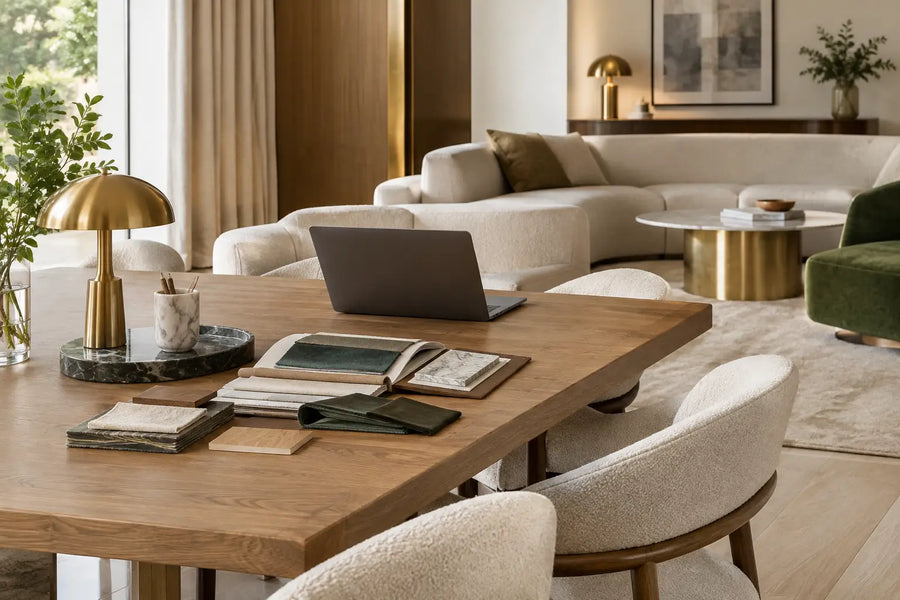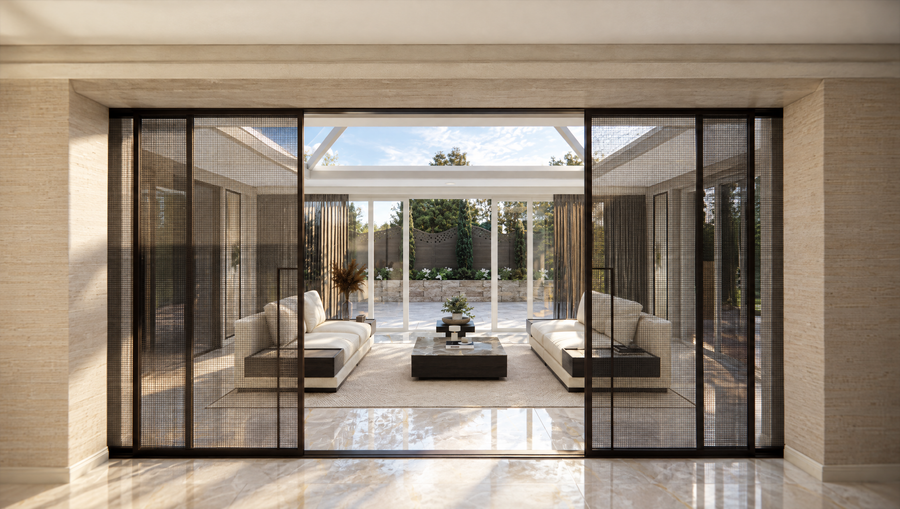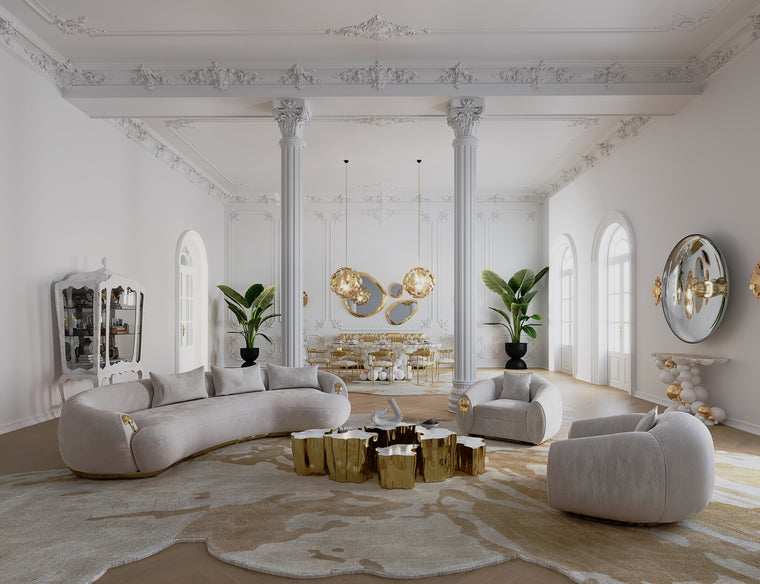
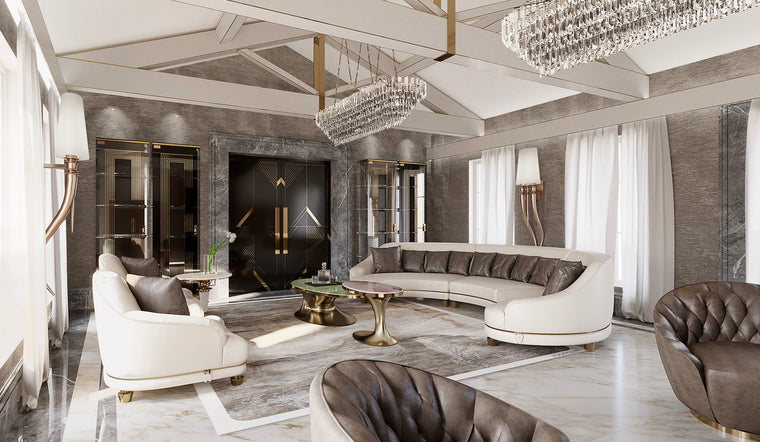
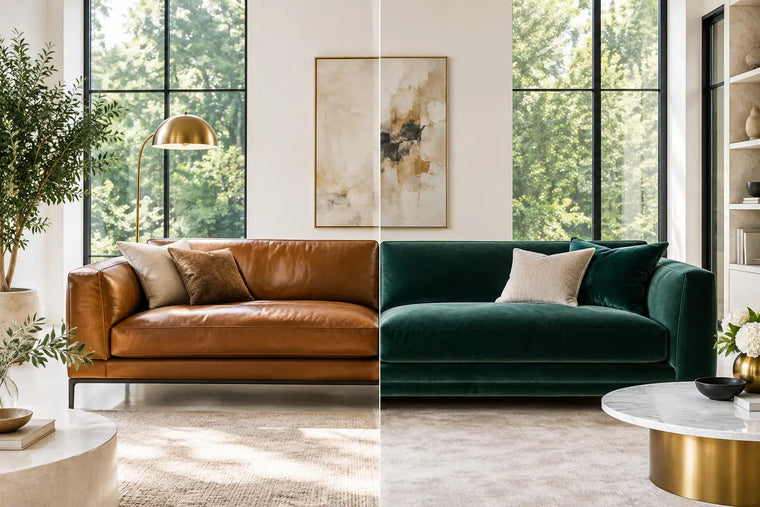

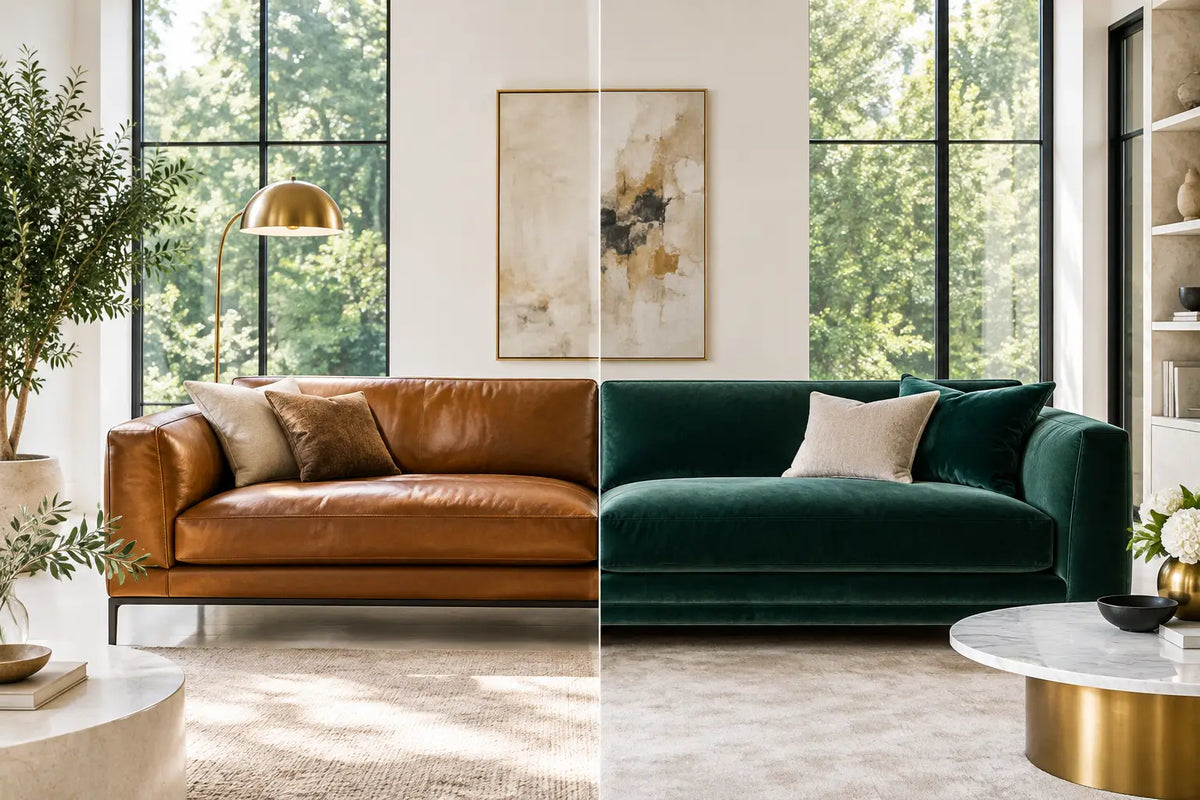
A sofa is often the largest upholstered element in a room, so its material does not simply determine how it feels to sit on. It directs the character of the whole scheme. In the discussion around leather versus velvet sofas, the right answer is rarely a matter of one material being inherently superior. It is about how the sofa will age, how the room is used, the quality of light, and the atmosphere the architecture asks for.
A richly finished leather sofa can bring restraint, structure and quiet authority to a space. Velvet introduces depth, softness and a more expressive relationship with colour. Both can be enduringly elegant, provided the frame, upholstery specification and proportion are considered with the same care as the surface material.
Leather versus velvet sofas: begin with the room
The first question is not which upholstery is more luxurious. Both can be exceptional. Instead, consider what the room needs the sofa to do visually.
Leather has a naturally clean, architectural quality. It is particularly effective in rooms with strong joinery, stone flooring, metal detailing or generous views, where a textile-heavy scheme may feel overly softened. A tailored leather sofa can establish definition within an open-plan living area and sit comfortably alongside walnut, bronze, travertine and smoked glass. In a contemporary penthouse or a modern classic drawing room, it often provides a useful counterpoint to curtains, rugs and layered cushions.
Velvet behaves differently. Its pile catches light from multiple directions, giving a colour remarkable variation across the day. A deep olive may appear almost charcoal in the evening; a warm ivory can take on a silvery cast beside north-facing glazing. This makes velvet especially compelling in rooms designed for lingering: formal sitting rooms, libraries, private lounges and bedrooms. It brings visual warmth without requiring a busy pattern or an excess of accessories.
Neither choice should be made from a fabric sample alone. A leather hide has natural grain, tonal variation and markings that become part of its identity. Velvet needs to be viewed in the proposed colour, ideally against the wall finish and under the intended lighting. A material that feels reserved in a showroom can become dominant in a low-lit room.
The quality behind the surface
The distinction between a well-made sofa and a merely attractive one is most apparent after several years of use. Upholstery can only perform as well as the construction beneath it.
For leather, full-grain or high-quality top-grain hides are generally the most desirable for residential furniture. Full-grain leather retains the natural surface of the hide and develops a patina through use. It will show character over time, rather than remain uniform. This is a virtue in a relaxed family room or a country house setting, but it may not suit a client seeking a highly consistent, immaculate finish. Heavily corrected or coated leathers can offer a more even appearance and easier maintenance, though they lack some of the tactile richness and ageing potential of a finer hide.
With velvet, composition matters greatly. A high-quality cotton velvet has a dry, refined handle and a beautiful depth of colour, but it may be less forgiving in a hard-working household. Mohair velvet is prized for its lustre, durability and resistance to crushing, making it a considered choice for formal rooms that are still regularly used. Performance velvets can be highly practical, particularly for young families or homes with pets, but should be selected carefully: the best retain a nuanced pile and tailored appearance rather than feeling overtly synthetic.
In either material, look beyond the upholstery to the suspension, cushion filling, tailoring and frame. A hardwood frame, properly engineered seat support and cushions suited to the intended level of formality will have a greater influence on long-term comfort than surface appearance alone. Bespoke upholstery allows these decisions to be adjusted to the household, from firmer feather-and-foam seat pads for a formal reception room to deeper, softer cushions for everyday living.
Living with leather
Leather’s reputation for practicality is deserved, although it is not maintenance-free. It is naturally resilient and comparatively straightforward to wipe after everyday spills, which makes it well suited to rooms used by children, dogs or frequent guests. It also does not hold dust in the same way as a densely woven fabric, a useful quality for some households.
However, leather responds to its environment. Direct sunlight can fade it, while proximity to radiators or underfloor heating zones may gradually dry the hide. It benefits from appropriate conditioning at intervals, always using products specified for that particular finish. Pale leather and aniline leather deserve particular consideration, as denim dye transfer, oils and marks can become visible.
Its ageing is central to its appeal. Creasing on seat cushions, softening at the arms and subtle changes in tone are expected rather than faults. In a home where furniture is intended to acquire personal history, leather has few equals. In a tightly controlled, formal scheme where every surface must remain pristine, a protected leather or another upholstery may be the wiser specification.
Living with velvet
Velvet rewards attention with extraordinary visual presence. Its softness absorbs sound, tempers the hardness of stone or timber, and makes a generous sofa feel inviting rather than imposing. Yet it should be chosen with an understanding of pile direction and pressure marking.
The shifting light and shade often seen on velvet are known as bruising or shading. On a quality velvet, this is a natural result of the pile moving in different directions, not evidence of poor manufacture. It can make the sofa appear slightly different from one seat to another, adding depth and movement. Clients who prefer complete tonal uniformity may find a textured woven upholstery more reassuring.
Regular gentle brushing with a soft upholstery brush can help restore the pile, while prompt professional advice is sensible for stains. Vacuuming should be done carefully with a suitable attachment, avoiding aggressive pressure. For homes with pets, velvet is not automatically unsuitable, but claw marks, hair and repeated occupation of one favoured spot should be anticipated. A durable mohair or performance velvet may be appropriate, while a delicate cotton velvet is better reserved for a less demanding room.
Colour, silhouette and scale
Material and form must work together. Leather tends to favour a crisp silhouette: slim arms, channelled backs, precise piping or a low, architectural profile. It can also be highly successful on generously proportioned, deeply cushioned forms, particularly in supple hides, but the design benefits from visual discipline. Too many decorative details can make leather feel heavy.
Velvet is more adaptable stylistically. It can emphasise the sculptural curves of a contemporary sofa, lend grandeur to a buttoned-back design, or soften the lines of a modular arrangement. In substantial rooms, a jewel-toned velvet sofa can act as a focal point with real permanence, especially when balanced by quieter walls and a rug with restrained pattern. For smaller spaces, pale velvet is not automatically the answer. A mid-tone such as moss, tobacco, petrol blue or warm taupe may offer greater depth while disguising daily wear more gracefully.
Consider scale before committing to either. A large sectional in dark leather can appear weighty in a room with low ceilings or limited daylight. Conversely, a pale velvet sofa with a high back may visually expand if paired with similarly soft curtains and an insubstantial rug. Contrast is often what gives a room composure: leather against wool, velvet beside timber, a crisp linen cushion against a curved upholstered arm.
Making a considered choice
Choose leather when the room benefits from definition, when ease of everyday cleaning is a priority, or when you welcome a material that records use with dignity. It is particularly persuasive in studies, media rooms, open-plan spaces and interiors where natural stone, timber and metal already provide a strong material language.
Choose velvet when atmosphere, colour depth and tactile comfort are central to the brief. It is a natural choice for elegant reception rooms, bedrooms and spaces intended to feel enveloping after dark. It can also be surprisingly practical when the correct composition is specified for the household.
For larger projects, there is no reason to treat the decision as exclusive. Leather in a family room and velvet in a formal salon can create a subtle hierarchy between spaces. A leather sofa can also be softened with velvet cushions, while a velvet sofa gains clarity from leather occasional chairs. The most successful interiors rarely repeat one texture indiscriminately; they build interest through measured contrast.
A sofa should look composed on the day it arrives, but it should also remain convincing after years of conversation, quiet evenings and daily use. Specify the material that will age in a manner you genuinely appreciate, and let the room's architecture, light and life guide the final decision.
Touched Interiors
The Insider is written by the Touched Interiors design studio in Manchester, founded by Kunal Trehan in 2009 and named Interior Design Studio of the Year in 2024 and 2025. About the studio.