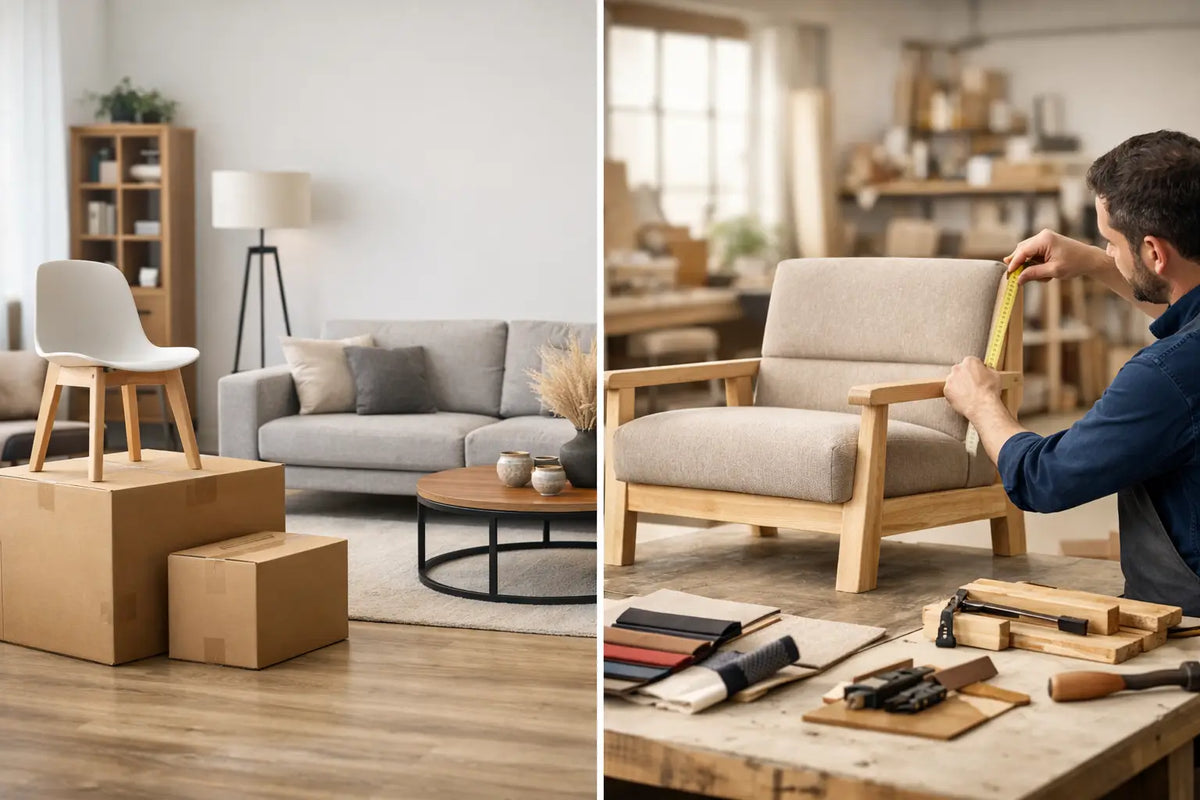
A sofa that is three centimetres too deep can interrupt the circulation of an otherwise beautifully planned drawing room. A dining table that is slightly too narrow can make entertaining feel constrained. This is the practical distinction at the heart of ready made vs made to order furniture: not simply speed versus waiting, but selecting the right degree of control for the architecture, the way a household lives and the longevity expected of the piece.
For a considered interior, both routes have a place. The strongest schemes rarely rely exclusively on one or the other. Instead, they distinguish between pieces that can be selected with confidence from an existing collection and those that should be commissioned around a particular room, sightline or ritual of daily life.
Ready Made vs Made to Order Furniture: The Essential Difference
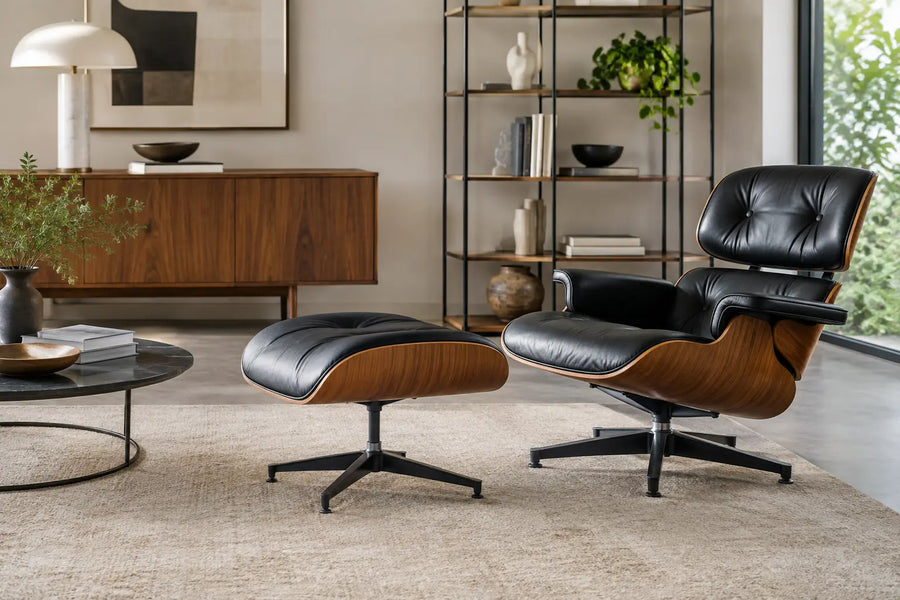
Ready-made furniture is produced in advance and held in stock, or available for prompt dispatch from a supplier. It is generally purchased as seen, in a fixed configuration and finish, although some collections may offer limited options. Its principal advantage is certainty: the dimensions, colour and character of the item can often be assessed immediately, particularly in a showroom.
Made-to-order furniture is produced after a specification has been confirmed. That specification may be relatively simple, such as selecting an upholstery fabric, leg finish or dining-chair trim from a defined collection. It may also involve revised dimensions, a different cushion construction, a tailored configuration or a material developed specifically for the project.
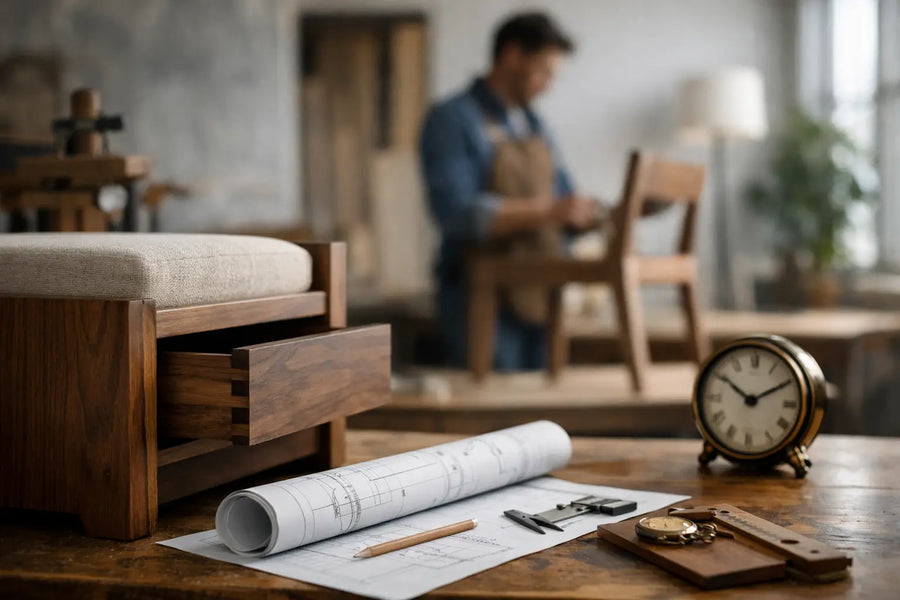
Bespoke furniture sits at the most individual end of this spectrum. Rather than adapting an existing model, it is designed and made in response to a detailed brief. The distinction matters because a made-to-order piece still works within a manufacturer’s established construction, while bespoke work can address highly particular requirements, from an unusually shaped bay window to integrated storage within architectural panelling.
When Ready-Made Furniture Is the Right Decision
Ready-made pieces are particularly valuable when a room needs one decisive addition rather than a complete recalibration. A sculptural occasional chair, a carefully chosen side table or a decorative lighting piece may bring presence to an established scheme without requiring months of development. For clients furnishing a pied-à-terre, preparing a completed property for use, or replacing a single item after a move, availability can carry real weight.
There is also a pleasure in selecting something with a resolved identity. The scale, silhouette and finish have already been considered by the designer, and a well-made ready-made piece can offer outstanding craftsmanship. The key is not to mistake availability for compromise. Many established luxury collections are created with excellent materials, disciplined joinery and proportions that have earned their longevity.
However, quick availability should not override planning. Before purchasing, measure the room and the route into it. Consider door openings, stair turns, lift dimensions and the clearance required around the furniture once it is in place. In a living room, a coffee table may look generous in isolation but leave insufficient passage between seating. In a dining room, the table must accommodate both chairs and the space needed to draw them back comfortably.
Ready-made furniture is most successful when its dimensions support the room rather than merely fit inside it. This is especially relevant in larger homes, where underscaled furniture can make an architecturally impressive room feel strangely incomplete.
The value of seeing a piece in person
Photography is useful, but it cannot fully convey upholstery tension, timber grain, the density of a marble top or the way light behaves across a lacquered surface. Viewing a ready-made piece in person provides useful reassurance, particularly for highly tactile materials such as bouclé, saddle leather, brushed metal and open-pore timber.
It also reveals comfort. Seat depth, seat height and back angle are deeply personal. A beautifully designed sofa that encourages a reclined posture may suit an informal media room, yet feel less appropriate in a formal reception space used for conversation. A showroom visit allows those distinctions to be felt rather than assumed.
Where Made-to-Order Furniture Earns Its Lead Time
Made-to-order furniture becomes compelling when proportion, finish or function must be exact. It is often the better route for principal seating, dining tables, beds, fitted banquettes and larger cabinetry, where an incorrect dimension is difficult to disguise and costly to correct.
A made-to-order sofa, for example, can be specified to establish the right relationship with a fireplace, rug and coffee table. The number of seat cushions, arm width, overall depth and upholstery can be tailored to the composition. In a compact London flat, a reduced-depth design may preserve valuable circulation. In a country house sitting room, a deeper seat and more generous silhouette may be appropriate, provided the room’s architecture can carry the scale.
Material choice is equally significant. A fabric should be selected not only for colour but for its handle, durability, pile direction and response to natural light. In rooms with strong sun exposure, some textiles require particular care. In family areas, removable covers or inherently resilient weaves may be sensible. For leather, consider the intended patina: protected finishes offer greater resistance to marking, while natural aniline leathers develop character but demand a more accepting approach to wear.
Made-to-order also enables continuity across a scheme. A dining chair may be upholstered in the same textile family as a window seat, with contrast piping that quietly references a curtain border. Timber stains can be balanced against flooring, joinery and architectural doors, avoiding the accidental clash of warm and cool undertones.
Lead times are part of the design process
A longer lead time is not an inconvenience to be ignored; it is a programme consideration. Commissioned furniture should be specified early, particularly where it is integral to electrical planning, joinery detailing or room layout. Bedside tables may affect reading-light positions. A dining table’s dimensions influence pendant placement. A bespoke headboard can determine where wall lights and switches sit.
The most successful projects establish a procurement schedule alongside the wider design programme. This allows time for drawings, samples, approvals, production, quality checks and installation. It also reduces the temptation to make a rushed decision late in the project, when choices tend to be governed by availability rather than suitability.
How to Decide Which Pieces Deserve Customisation
Begin with the furniture that governs the room. In a living space, this is often the sofa. In a dining room, it is usually the table. In a bedroom, it may be the bed and headboard composition. These are the pieces most likely to benefit from made-to-order dimensions and finishes because they establish circulation, comfort and visual balance.
Next, consider permanence. An occasional stool can be changed relatively easily as tastes develop. A large sectional sofa, a substantial dining table or a pair of bespoke bedside tables is intended to remain for years. Commissioning is particularly worthwhile where a piece will be central to everyday use and where better specification will meaningfully improve its performance.
Finally, identify the elements that can be more spontaneous. Accessories, occasional seating and certain accent tables can introduce a more immediate, collected quality. They also offer an opportunity to respond to a scheme once the principal pieces are installed and the room’s light, texture and atmosphere can be properly read.
Questions to Ask Before You Commit
The right choice is often clarified by a few practical questions. Does the furniture need to solve a spatial problem, or does it simply need to complement an existing setting? Is a particular fabric, finish or size essential to the scheme? Will the item be used daily, and by whom? Are there access constraints that dictate a modular or made-to-order solution?
It is also worth asking what is included in the specification. For upholstered furniture, this can include frame construction, suspension, cushion filling, fabric composition and the treatment of seams. For casegoods, look at timber veneers or solid timber, edge detailing, internal fittings, hardware and surface protection. Two visually similar pieces can differ considerably in how they age, feel and perform.
At Touched Interiors, this assessment is often part of a wider design conversation, because furniture choices rarely stand alone. A considered procurement plan connects each piece to the room’s proportions, lighting, materials and intended use.
A home feels settled when its furniture appears to belong to the architecture and to the people who use it. Choose ready-made pieces for their clarity, character and immediacy; commission furniture when precision will make a lasting difference. The aim is not to customise everything, but to be exact where exactness counts.
Touched Interiors
The Insider is written by the Touched Interiors design studio in Manchester, founded by Kunal Trehan in 2009 and named Interior Design Studio of the Year in 2024 and 2025. About the studio.